For most of his life, Graham Stanley has worked in Education. He holds a Master’s degree in Educational Technology and ELT from the University of Manchester, UK, and is currently Teacher Development Lead for the British Council (LinkedIn profile).
Apart from the UK, he has spent time in Spain, Uruguay, and Mexico, working as a teacher, teacher educator, teacher trainer, country director, portfolio / programme / project manager, instructional designer, materials writer.
Graham has blogged about English Language Teaching since 2003, most recently as @ELTGraham on substack. On social media, you can find him on Blue Sky. He has spoken widely at international conferences and is an award-winning author of books for teachers:
LANGUAGE LEARNING WITH TECHNOLOGY
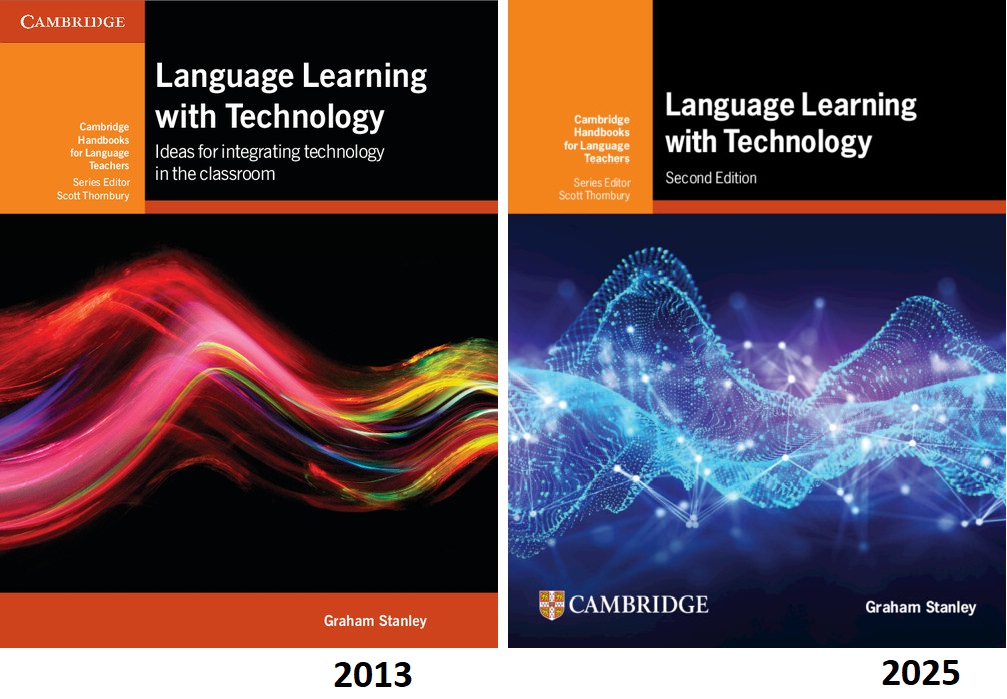
Language Learning and technology was first published by Cambridge University Press in 2013. The first edition of this handbook for language teachers was recognised by the English Speaking Union with the ‘HRH Duke of Edinburgh ELT Book of the Year‘ award in 2013. The second edition of the handbook was published in 2025.
This updated version expands to 332 pages and includes over 170 practical classroom activities suitable for beginner to advanced learners across young learners to adults. Activities are organised around specific language learning goals and areas, such as language systems, skills, project work, and assessment, rather than specific technologies, ensuring pedagogy remains central and technology is incorporated only when it adds significant value. Updates reflect major shifts in educational technology, with increased emphasis on mobile technologies and apps, greater attention to online, hybrid, and remote teaching possibilities. The edition incorporates generative artificial intelligence tools, including large language models, and image-generation tools, with relevant ideas distributed across chapters. Two entirely new chapters cover Fun and games and Inclusion and special needs.
Reviews of Language Learning With Technology:
“I cannot recommend this book highly enough! I have just read it cover to cover while travelling at the weekend, and I just want to start using all the ideas straight away! The examples are mainly relating to the teaching of English, but as a teacher of French and German, I can see that the ideas can be transferred to any other language.” Helen Myers, Amazon and on her blog
“It was great news to hear that “Language Learning with Technology” (Stanley 2013) was nominated and consequently won the Duke of Edinburgh English Speaking Union English Language Book Award. A big congratulations to Graham for his continued effort with technology and language learning, I have always enjoyed reading his contributions to this field…This book is particularly invaluable for teachers who would like to gain more confidence when incorporating technology in the classroom and I would highly recommend language teachers and schools to consider getting it.” Martin Sketchley – ELT Experiences
“This book arrived a couple of weeks ago and I was like a small child with a new toy, I just couldn’t wait to try it out! It has saved me hours and hours of scouring the internet for free tools that I can use in the classroom…the suggested tasks are easy to adapt to different target groups (eg different levels, different ages, business students) and different learning objectives (eg IELTS prep). There is really something for everyone. The suggested tools and technologies are well within reach of any teacher who can use a laptop or a tablet and for teachers who are already comfortable with using technology in the classroom, I think you’ll find new inspiration in this guide. The section on pronunciation is spot on. It really makes sense to use technology for helping students to modify their pronunciation (eg accent reduction for some students with intelligibility issues) and the teleprompter, voice recognition, podcasting and other recording activities described in the book are great fun to do. Many of the activities in the chapters on speaking and listening can also be useful for helping students with pronunciation problems.
Most of all I like the way the book focuses on group activities, many of the suggested tasks get students working together to create artefacts (eg a podcast, a wall) which gets even some “quieter” students involved as everyone can actively contribute, even those who don’t like speaking in front of the rest of the class. At the same time, a lot of activities described in the book can be “taken home” which is great for autonomous learning (as individuals or in small groups), whether the course is “blended learning” or not. I work in a country where nearly everyone has a smartphone and a very open attitude to new technologies, so I guess that helps. But I’m sure there are plenty of simple ideas in this book that could be used with just one laptop and an internet connection. Finally I would recommend this book for almost any teacher (any subject) who wants to use more technology in their curriculum. Nearly all the ideas can be tweaked for any subject.” Amazon review by P. Roux
REMOTE TEACHING
Innovations in Education: Remote Teaching (British Council, 2019) is a book of research and case studies, mainly exploring the teaching of English to school children via videoconferencing that takes place in Uruguayan primary schools across the country, thanks to Ceibal.
Graham was involved in helping to project manage this, before taking on the role of country director for the British Council in Uruguay,where he decided it was a good idea to capture the learning that emerged from the remote teaching programme so that others could benefot from it. Hence the 2019 book, which is free to download on the British Council’s TeachingEnglish website, and which was first published as a special edition (2018) from Ceibal.
Many of the chapters in the publication focus on Ceibal en Inglés, an innovative programme teaching primary children in Uruguay. Others take a more general view, and there are also case studies from the UK, Argentina, Mexico and Iraq. The publication is aimed at practitioners, policymakers and anyone interested in language teaching and teacher training via videoconferencing.
The incorporation of technology in education, especially the use of videoconferencing equipment to connect teachers and students, institutes and schools, and from its onset organisations such as Ceibal and the British Council, has proved that above and beyond the achievement of our teaching goals, an educational community has been created and flourished. In this educational community learners are the main focus of attention, and teachers work collaboratively and co-operatively, paying little attention to restrictions imposed by geographic, linguistic or cultural barriers. The presence of technology liberates remote and classroom teachers from their comfort zones and enables them to meet challenges, to find new pedagogies, new forms of teaching and learning, and new alliances among themselves and with their learners.
Other references:
- A follow-up to this publication, Lessons Learned from 10+ Years of Ceibal en Inglés was published in 2024. A shorter summary report is also free to download.
- Stanley, G. ‘Collaborative Expertise’ in Collaboration as the Axis to Ceibal en Inglés (Ceibal en Inglés, 2024).
- Stanley, G. ‘Remote Teaching: A Case Study in Teaching English to Primary School Children in Uruguay via Videoconferencing’ in Teaching English to Young Multilingual Learners (2026). Routledge & TIRF.
DIGITAL PLAY
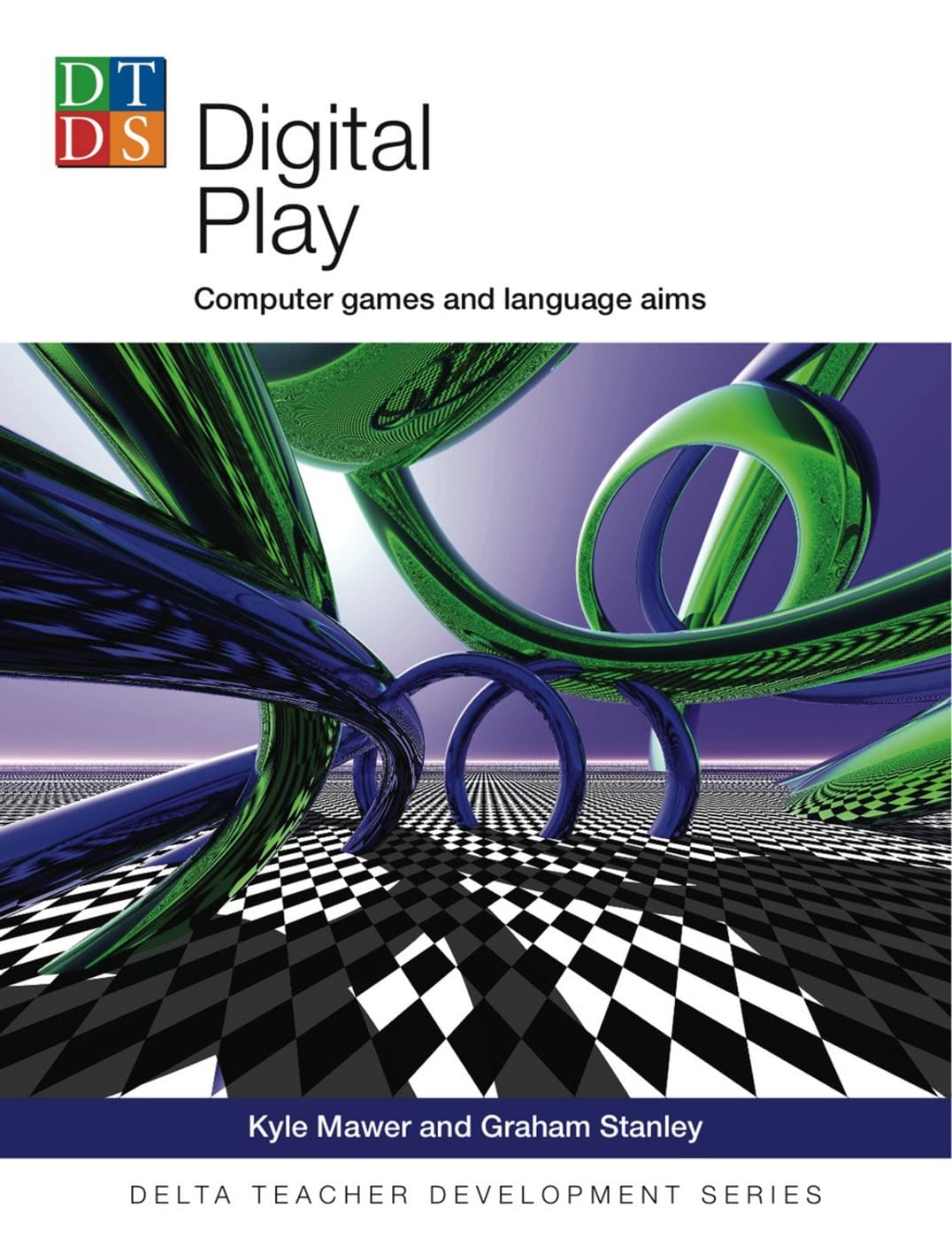
Digital Play: Computer games and language aims (Delta Publishing, 2011) was the first book for teachers dedicated to using computer games for teaching and learning.
This groundbreaking and influential book for teachers won the British Council ELT Innnovation (ELTon) award for Teacher Resources in 2012.
James Taylor, in a review for tefl.net , said: ‘an innovative and refreshing look at an area that has long been neglected by ELT. It is written with convincing verve and just the right balance of personal opinion, practical suggestions and academic backing. It skillfully tackles difficult subjects head on, especially the negative connotations attached to computer games and the reticence of some teachers to try using them, leaving the reader with the impression that embracing video games is not so much a big leap into the future, but a realistic and manageable step into the 21st century.’
Shaun Wilden, writing in the IH Journal said: ‘I think Digital play offers an excellent balance of opinion, suggestion and activities. Stanley and Mawer clearly understand and love their chosen topic. This helps bring clarity to an area that might daunt a lot of teachers, providing them with simple stepping-stones to incorporating computer games into their classrooms.’
The entry on digital Play in Grokipedia states ‘The work has been recognized for its balanced, accessible approach that prioritizes language aims over technological novelty, serving as an inspiring entry point for teachers hesitant about digital tools while offering adaptable ideas that maintain learner motivation through the engaging theme of computer games.’
I have also written book chapters, articles for teachers, academic papers, which include:
- Stanley, G. ‘Integrating technology into secondary language teaching’ in Motteram, G. (2013) Innovations in learning technologies for English Language Teaching. British Council.

